

Water is necessary for life, fatally necessary. All life on Earth relies on it for basic and complex organic functions, from the gigantic ocean-dwelling blue whale to the minute Staphyloccocus aureus bacteria so fond of our armpits. For that reason, it is dramatically ironic that the same molecule – finite and not in fantastic availability – can be used in almost infinite ways to make our lives easier and more comfortable, rendering it even scarcer and more valuable. Water is a drink, a means of transportation, an energy and carbon sink, a formidable solvent and a cleaning agent, to name just a few of its applications. Only 0.5% of Earth’s water is available freshwater, the kind used for the overwhelming majority of Humanity’s needs – bodily, leisure, industrial and commercial.
There is an obvious conflict of interest on Society’s part when evaluating water consumption: we need it to keep us alive, but it must also be “wasted” to run our houses and companies and enable progress. How can Nature and the World then keep up with this demand? The easy answer to that difficult question is to simply produce less things, change our overconsumptionist behaviors and turn to simplicity. The fact of the matter is that, even if we manage to do it individually, the overall population growth will – at best – keep production and sales volumes constant. The underlying reason our ways are not yet sustainable is the inefficiency of the current mindset, practices and processes. Inventing and (perhaps more important) reinventing processes, developing innovative technologies and designing products through a different perspective might be what is needed from now on to reverse the consensual stark predictions about our planet’s fate.
McKinsey&Company, Style that’s sustainable: a new fast-fashion formula, 2016. One industry in dire need of reinvention and fast forwarding into the future is TINTEX’s own, the textile industry, and the dyeing and finishing sector in particular. The Fashion & Clothing supply chain is a major contributor to water consumption worldwide, responsible for 4% of all freshwater use, second only to the Agricultural business (70%)2,3. With clothes being such ubiquitous items, every little improvement in efficiency and design throughout their production – from farm to garment – goes a long way in offsetting the overall environmental impact of the industry. In Portugal, water availability – or lack thereof – varies significantly with latitude. In the North, where TINTEX is located, the situation is fortunately described as a “Moderate Rain” but is does not mean efforts should not be made to ease the strain on water resources in the region and where our activity has a meaningful impact. At TINTEX, numerous steps have been taken in this regard, pushing the way forward to better employ resources, especially water, in creating smart, quality fabrics. Some of these steps were taken at the design level, others at the production level and still others at the management level.
Resourceful Design
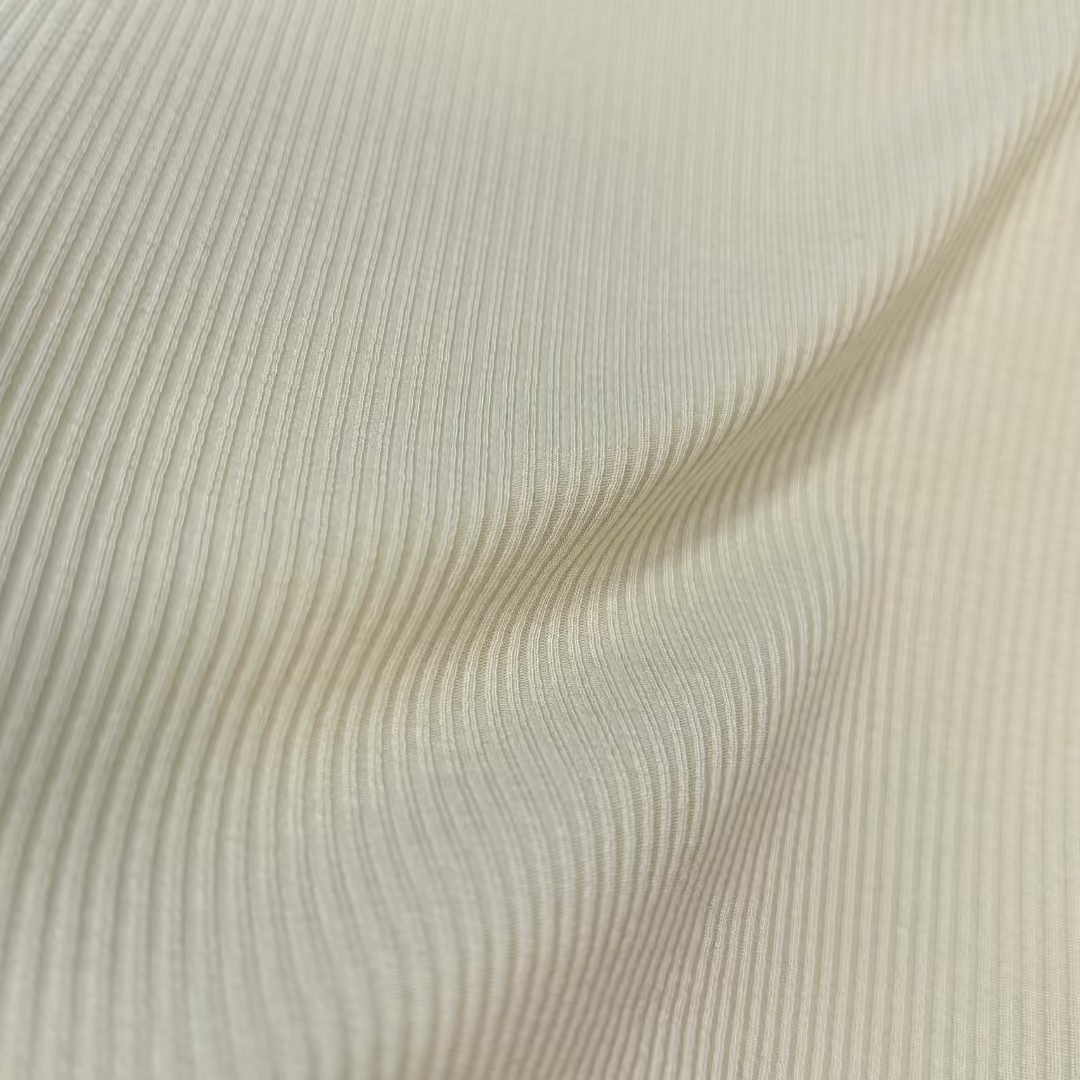
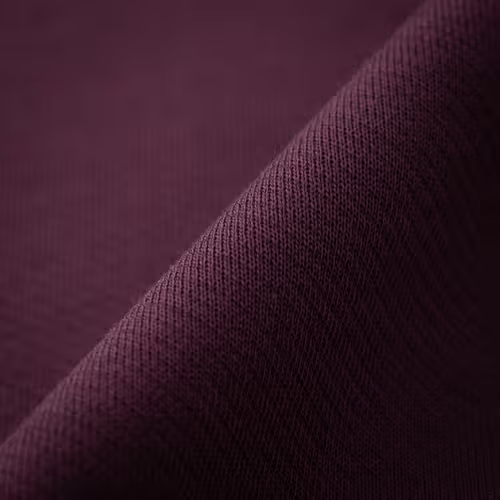
TINTEX is specialized in cellulosic fabrics, mainly cotton and lyocell. This specialization came about years ago (twenty to be precise) following an identified global need to shift from synthetic to natural (or regenerated) fibers and develop the most comfortable, performing and responsible fabrics possible. That remains our ethos to this day, pushing it even further with the aid of new sustainable fibers, bio-based polymers and the inclusion of agroforestry by-products and residues, reinforcing the functionality, aesthetics and purpose of our knits.
Thoughtful Processing
Thanks to cutting-edge machinery, we boast one of the lowest net liquor ratios (liters of water used to treat 1 kg of fabric) of the industry, but that only takes us so far and still we consume 120 L/kg; the real reduction in water consumption is achieved by innovation and adaptation applied to industrial processes.In that field, TINTEX has developed a patented technology, named Colorau®, in which plant extracts completely substitute synthetic dyes in the dyeing step, while also avoiding the need for certain auxiliary chemicals and repeated rinsing, leading to 60% less water consumed when compared to conventional dyeing processes. Our mercerization and bio-polishing processes also give the fabric their distinct, luxurious and durable look and feel, maintained wash after wash, minimizing the need for buying (and thus, to produce) new clothes. The company’s finishings portfolio also includes important water-conserving solutions, such as antibacterial and odor neutralization treatments (to reduce the activity of the bacteria I mention at the start of this article), which greatly reduce the need for frequently washing – and drying – garments. TINTEX’s knits coating line, apart from being unique in the world, is also a reference in the industry for only using water-based formulations and incorporating pine shell, cork, coffee, sawdust, peppermint and many other vegetal residues, as we usually do.
Visionary Framework
To be effective, all measures put in place to reduce resource consumption must be aligned with integrated management policies, which, in turn, reflect the path set forth for the company by the shareholders. In that sense, TINTEX has, for several years now, been diligent in adopting the strictest quality, ecological and social standards applicable to the textile industry. Our Sustainability Department validates every chemical auxiliary entering our facilities through the bluesign®, ØZDHC, Oeko-Tex® and ISO 14001 sieves, with the company being often audited by these and other similar entities with regards to wastewater, raw material and finished product accountability.In evolving and adopting the best practices when it comes to water management, TINTEX is also developing an integrated solution, repurposing the treated wastewater and directing it back at the dyeing stage; 50% will be recycled within the next year and close to 90% within the following 3-4 years. This way, less water is withdrawn from groundwater and more control is held over the quality of the incoming water.The road to minimal water footprint is still a long one for us at TINTEX, as well as for the Industry and the World in general, but surely and steadily more and more can be done. I am sure one day the effort and patience will be rewarded – I just hope we realize that before water stops falling from the sky.